
Monitor or remove
If a wisdom tooth causes no problems, regular review may be reasonable. Removal is usually discussed when there is recurring infection, decay, damage to the next tooth or ongoing pain.
WISDOM TOOTH REMOVAL · SECTOR 93, NOIDA
A wisdom tooth that hurts, is stuck or keeps causing trouble needs an examination before anyone decides between monitoring and removal. Our team explains what the examination and imaging show and what each option involves.
Book an appointmentCall about a visit: +91 62397 16041
MONITOR OR REMOVE
Wisdom teeth are the last molars to arrive, usually in the late teens or twenties. Many sit comfortably, while others only partly come through, grow at an angle, press on neighbouring teeth or trap food and bacteria. That can lead to pain, gum swelling, decay or repeated infection. Whether a tooth should be removed depends on its position, your symptoms and your general health.
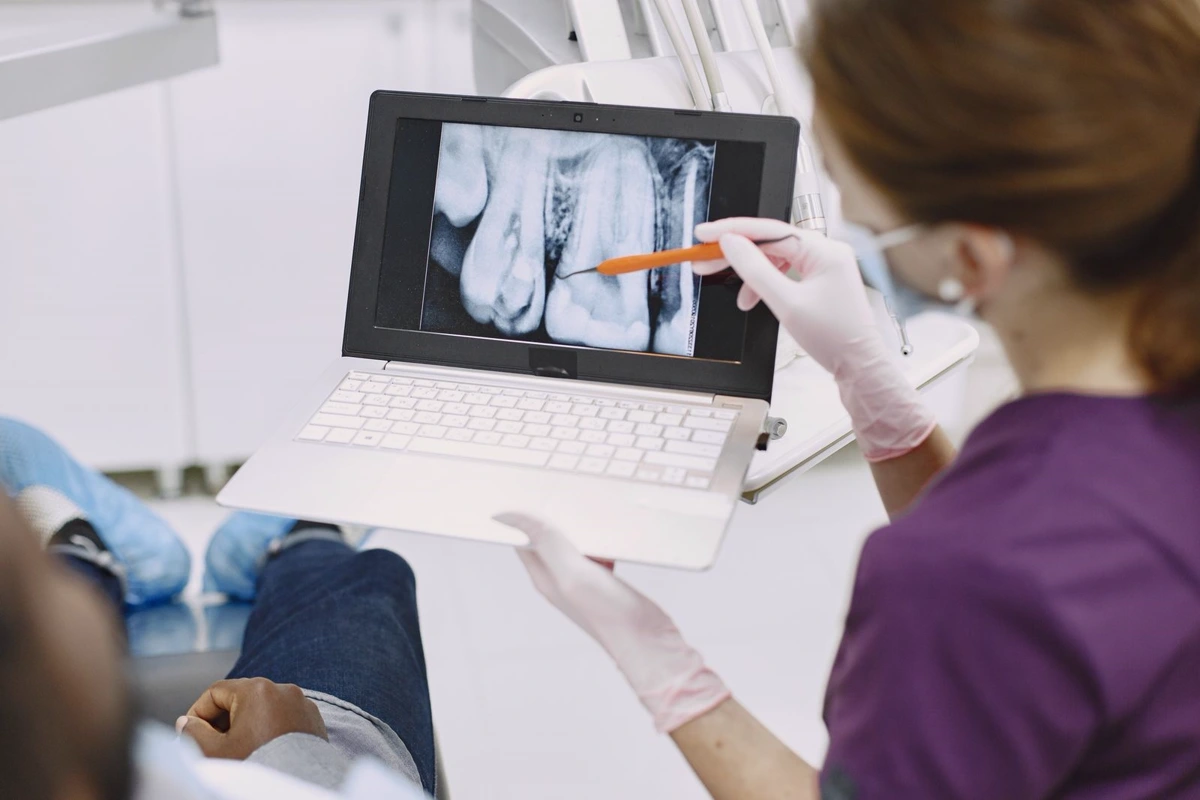
The dentist examines the area and usually advises an X-ray to see how the tooth sits and how close it is to nearby structures, including nerves. Complex positions may need a consultation with an oral and maxillofacial surgeon. Consultant appointments are arranged through the clinic.
If a wisdom tooth causes no problems, regular review may be reasonable. Removal is usually discussed when there is recurring infection, decay, damage to the next tooth or ongoing pain.
An X-ray or scan helps show the roots and how they relate to nerves and sinuses. Ask what it shows and how that affects the risks for your tooth.
Swelling, tenderness and difficulty opening the mouth can occur for a few days. You receive written aftercare advice and know whom to contact if something feels wrong.
WHAT TO EXPECT
Tell us where it hurts, how often, any swelling or bad taste, and your medicines, allergies and health conditions.
The dentist examines the area and may recommend an X-ray to plan the next step.
Talk through monitoring versus removal, the type of procedure, anaesthesia options, recovery, the risks relevant to your tooth and the fees.
Receive clear aftercare instructions and a review plan, and ask when to seek help if pain, swelling or bleeding gets worse.
Removal can relieve repeated infection and protect neighbouring teeth, but it is a surgical procedure with risks that depend on the tooth, such as dry socket, infection, bleeding or temporary or, rarely, lasting numbness near a nerve. Your dentist should explain the risks that apply to you. Seek urgent medical care for swelling that spreads to the face or neck, difficulty breathing or swallowing, fever, or bleeding that does not stop.
Before the appointment, note your symptoms, medicines and allergies and bring any earlier X-rays. Arrange for someone to come with you if sedation or a longer procedure is planned, and follow the specific advice you are given before and after the procedure.
No. Teeth that are healthy, fully through and easy to keep clean may only need monitoring. The dentist recommends removal based on examination and imaging.
It varies with the position of the tooth and the procedure. Your dentist can give an expected range for your case and explain when you can return to work or study.
Imaging is usually advised before removal because it shows the position of the tooth and nearby structures. The dentist explains which image suits your case.
The dentist will tell you whether your tooth can be treated in the clinic or needs a consultation with an oral and maxillofacial surgeon. Consultant appointments are arranged through the clinic.
Book a consultation at Dental Care Clinic and Implant Hub, Shop No. 7, Gali No. 2, Chaudhary Market, Sector 93, Noida 201304.
Book an appointment Call +91 62397 16041 All dental care guides